
Why Affiliate Programs Need a Diversified Partner Mix
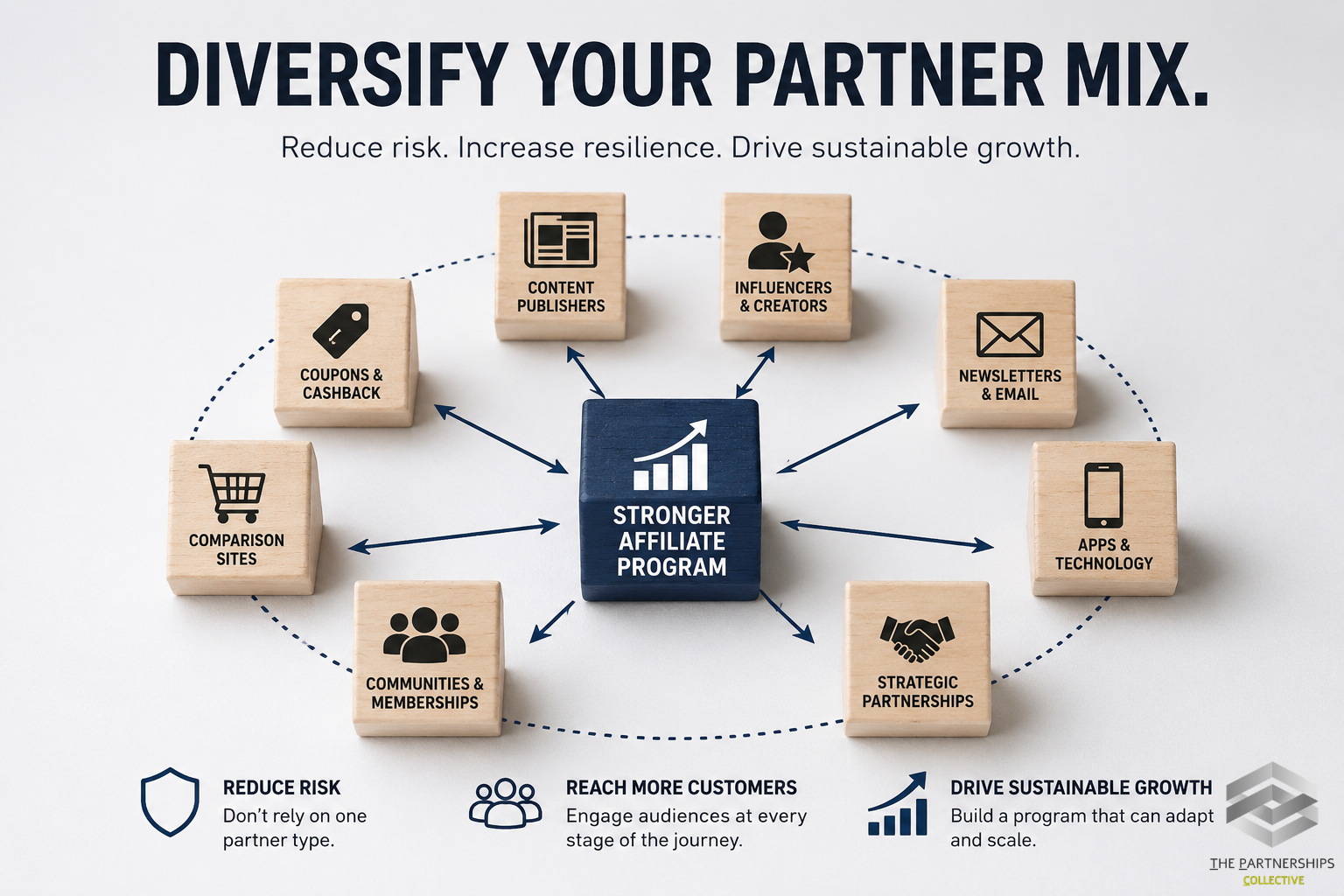
Many affiliate programs don’t have a growth problem- they have a concentration problem.
Far too often, here at The Partnerships Collective, we’ll see a program generating 50%, 60%, or even 80% of its affiliate revenue from a single partner type. Sometimes it’s cashback. Sometimes it’s coupon sites. Sometimes it’s a handful of content publishers that have been driving results for years.
On paper, everything looks healthy…revenue is growing, transactions are coming in. Everyone is happy - until something changes.
A top partner loses traffic. An algorithm update impacts rankings. A commission negotiation stalls. A competitor enters the market with a more aggressive offer.
Suddenly, a program that looked strong becomes vulnerable.
Just like an investment portfolio, affiliate programs benefit from diversification. The strongest programs aren’t built around a single partner category. They’re built around a balanced mix of partners that influence customers at different stages of the buying journey. Without the diversification, you increase the probability for concentration risk.
Affiliate Marketing Has Changed
For years, affiliate marketing was often viewed through a narrow lens.
Most programs focused on a handful of partner categories:
Coupon sites
Cashback and loyalty partners
Deal sites
Product comparison publishers
Those partners still play an important role today but what’s changed is the definition of an affiliate partner. Several years ago, Impact shook the industry up when they introduced “Partner Marketing”. As simple of a change as it may seem, many were up in arms (present company included). The concepts were seemingly the same but the name ultimately redefined how the channel can operate.
Modern affiliate programs now include:
Editorial publishers
Influencers and creators
YouTube channels
Podcasts
Newsletters
Finfluencers
Communities and membership groups
Browser extensions
Mobile apps
Technology partners
Strategic referral partners
Brand-to-brand partnerships
The affiliate channel has evolved into a broader partnership ecosystem. The brands seeing the most sustainable growth are the ones taking advantage of that evolution.
The Hidden Risk of Over-Reliance
One of the first things to evaluate when reviewing an affiliate program is where revenue is actually coming from.
It’s not unusual to find:
70% of revenue coming from loyalty partners
80% of new customer acquisition coming from a handful of content sites
One publisher representing 30% or more of total affiliate revenue
That concentration creates risk. If one partner category underperforms, the entire program feels the impact. If one major publisher leaves the program, revenue declines immediately. If one traffic source changes, growth slows overnight.
The issue isn’t that these partners are bad. The issue is dependency. No single partner type should be responsible for carrying an entire affiliate program.
Different Partners Play Different Roles
Another reason diversification matters is that customers don’t all buy the same way. Some customers discover a brand through a content article while others watch a creator’s review on YouTube. Some compare options across multiple publishers before making a decision and others simply search for a coupon code before checking out.
Each partner type contributes differently throughout the customer journey.
Awareness Partners
These partners help introduce a brand to new audiences.
Examples include:
Content publishers
Bloggers
Influencers
YouTube creators
Podcasts
These partnerships often drive discovery and education before a customer is actively shopping.
Consideration Partners
These partners help consumers evaluate options.
Examples include:
Review sites
Comparison publishers
Buying guides
Niche communities
YouTube creators, etc.
They help answer the question: “Is this the right solution for me?”
Conversion Partners
These partners help close the sale.
Examples include:
Coupon sites
Cashback programs
Loyalty platforms
Browser extensions
Conversion rate optimization partners
While they often sit closer to the point of purchase, they remain an important piece of the overall ecosystem.
Strategic Partners
These relationships can unlock entirely new audiences.
Examples include:
Brand partnerships
Referral partnerships
Industry associations
Technology integrations
These opportunities are often overlooked but can become some of the most valuable partnerships within a program.
A Diversified Program Is More Resilient
When revenue is spread across multiple partner types, programs become more stable. Performance doesn’t depend on one publisher. Growth doesn’t depend on one traffic source. Customer acquisition isn’t limited to a single audience.
Diversification also creates flexibility. If one partner category slows down, other partner types can continue driving growth. If a commission structure changes, the program is less exposed. If the market shifts, the business is better positioned to adapt.
How to Measure Concentration Risk
A simple exercise is to look beyond total affiliate revenue and evaluate where that revenue originates.
Ask questions like:
What percentage of revenue comes from the top five partners?
What percentage comes from a single partner?
Which partner category generates the majority of sales?
Are new customers coming from multiple sources or just one?
The answers often reveal opportunities for growth. Many programs discover they’re not actually diversified. They simply have multiple partners within the same partner category.
That’s not diversification.
That’s concentration disguised as scale.
The Best Affiliate Programs Look Like Ecosystems
The most successful affiliate programs today aren’t built solely around coupon sites influencers, content publishers, cashback/loyalty, etc.
They’re built around all of them.
Each partner type serves a purpose. Each contributes differently. Together, they create a more balanced, sustainable growth engine.
Affiliate marketing is no longer about finding one partner that can drive all of your growth. It’s about building an ecosystem of partners that can grow with your business, adapt to change, and reduce the risks that come from relying too heavily on any single source of revenue.
That’s what diversification looks like in a modern affiliate program. And increasingly, it’s what separates the programs that scale from the programs that stall.